How We Mark Bricks
If you have spent some time researching other brick engraving companies, you have undoubtedly noticed the debate between deep engraving (by sandblasting usually) and surface marking. This debate seems to be a little acrimonious at times. Here at That's My Brick!®, we use a patented, laser-based marking process that produces a layer of black, fused glass on the surface of the brick or tile. We chose this technology because it is the best overall solution for brick fundraising projects. The reason is really quite simple:
The majority of brick fundraising projects take the form of walkways or other similar, horizontal, installations. A deep engraved mark in a horizontal installation will tend to fill with sand, dirt, chewing gum, and even more unsavory materials. This will lead to ongoing maintenance problems and costs for your group. Therefore, a surface mark provides the best solution for these applications.
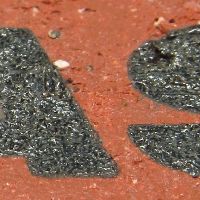
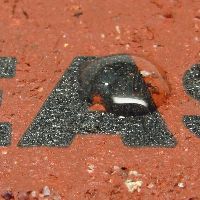
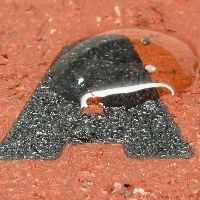
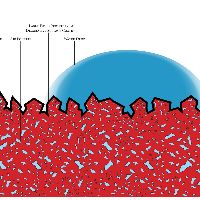
Laser Marked Process
Our marking technology produces a beautiful, black mark on any color clay brick or tile. This provides greater flexibility in the choice of brick and tile materials than many of our competitors offer. The fused glass layer is permanently bonded to the brick or tile and is flush with its surface - meaning less maintenance for your installation and no chance of the wear-based damage seen with deep engraved bricks or tiles.
Companies in this industry who deep engrave certainly recognize the potential issues with maintenance - some of them even offer to fill their marks with organic materials such as filled epoxies in various colors. Sometimes they charge for this service and sometimes they do not. The point is that the filler material becomes the "weakest link" in their products. Any home owner who has watched the organic materials in their roof shingles or vinyl siding fade, curl, embrittle, or otherwise fail knows from experience about this weak link.
Independently Tested
That's My Brick!® has extensively tested our marking technology using independent brick testing laboratories, such as the National Brick Research Center at Clemson University. Using the American Society for Testing and Materials (ASTM) standards as the basis for the evaluation, bricks marked by our process have been subjected to accelerated life testing in:
- Freeze/Thaw cycling
- Salt Spray exposure
- Ultraviolet Light exposure
All samples passed each of the ASTM-specified test conditions with flying colors (see here for testing results). This independent testing is key to our lifetime guarantee, and it has proven that bricks marked with our process and installed properly in your project will last longer than our lifetimes.
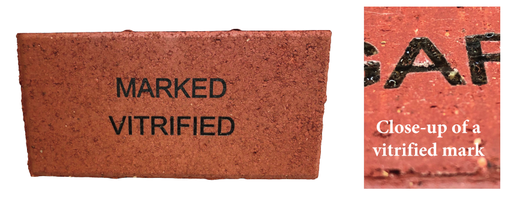
Laser Vitrification Process
Instead of bonding a thin layer of black glass to the surface of the clay brick as in our standard marking process, our vitrified laser process uses the laser energy to turn the clay of the brick itself into glass. This process of converting the clay into glass leads to the mark being slightly recessed from the surface of the brick. A high contrast black glass mark can be achieved by vitrification on the following stock brick types and colors:
- Claret (BB)
- Regimental Red (BB)
- Regimental Full Range (BB)
- Red Rustic (WG)
- Antique (WG)
- English Edge Red (PH)
BB = Belden Brick, WG = Whitacre Greer, PH = Pine Hall Brick. View all of our brick options.
Free standard graphics on bricks and tiles, plus no per line charge!